
You come back from the trip and you are still tired. Not the tired that a bad night causes. The kind that was already there when you left, and is still there when you unpack. The beach helped for a day, maybe two. Then the same ceiling came back down. You did everything right and it did not quite work. That feeling is what this article is about.
More women in their 30s and 40s are noticing it. The standard reset, the long weekend, the week away, the idea of doing nothing for a few days, stops converting the way it used to. The tiredness they left with is the same tiredness they returned with. And they are starting to look for a different kind of trip entirely.
What this decade actually feels like
The sleep that used to feel restorative no longer lands the same way. Energy has a ceiling it did not have five years ago. The second half of the cycle feels heavier than it used to. You do the same things that used to work and they return less than they should. None of this is diagnosable. None of it is your imagination. It is the signal of a body that is carrying more at the same time it is recovering less.
The reason is hormonal. This decade stacks career, relationships, caregiving, and personal ambitions at full volume. At the same time, cortisol, the body's stress hormone, becomes harder to regulate because estrogen, which buffers it through the HPA axis, grows less stable. Progesterone, which supports deep sleep, drops in the second half of every cycle. The load is the same. The recovery is slower. That gap is what most women feel but few can name.
Wiriya Sakcharoenchai, healthtech investor and Healiday founder, has written about this in her investment research. She notes that hormone-related symptoms in perimenopausal and menopausal women are among the most underestimated issues in women's health. Not because they are rare, but because women have been told to treat them as normal. They are common. They are not inevitable.
Why standard vacations stop working as well
The standard holiday is designed to remove demands. You stop working, you sleep more, you move less, you eat well. For the kind of tired that builds from overwork in your 20s, this works well. The system resets and you come back functional.
The kind of tired that accumulates in your 30s and 40s has a hormonal layer that removing demands does not reach. You can lie on a beach for a week and come back with a tan and the same underlying cortisol load, because what was driving the exhaustion was never only the schedule. It was what the schedule has been doing to your hormones across months and years. A wellness retreat built around that biology, rather than a generic schedule, is what a burnout recovery retreat actually needs to look like.
There is also something in how women process stress that a solo beach trip is not built to address. Under pressure, the female stress response is more oriented toward connection than the standard fight-or-flight picture suggests. Researchers call this the tend-and-befriend response, the evidence for it spans two decades. Under stress, women seek proximity and shared experience, not just stillness. A week spent largely alone with a good book can rest the body without touching the social and relational layer that has been running at capacity all year. You come back feeling physically better and emotionally still flat. That layer needs its own kind of input, and most standard trips are not built to provide it.
Why going with other women is part of the recovery
The science behind a women's health retreat is not only hormonal. Research finds that time spent in close female company produces measurable shifts in wellbeing. Positive social connection triggers the release of oxytocin, which lowers cortisol, reduces anxiety, and lifts mood in ways that rest alone cannot replicate.
Harvard Women's Health Watch has noted that strong social bonds influence long-term health in ways as significant as diet, sleep, and exercise. One large meta-analysis of data from over 300,000 people found that weak social connections increased the risk of premature death by up to 50%. The effect is not abstract. It shows up in sleep quality, in pain tolerance, in how the nervous system regulates itself after a period of sustained demand.
A female wellness retreat that integrates shared experience addresses something a solo trip cannot. The wellness journey works not because it is medical or because it is social, but because it is both at once.
What shifts when you get it right
Three days is not enough to fix anything. That is worth saying plainly. What three days can do is give you a clear picture of where you are, why you feel the way you do, and what to adjust when you get home. Most women describe the shift not as transformation but as orientation. You leave knowing what you are dealing with, which turns out to be most of what was missing.
The 90-day plan you take home from day three is where the real work happens. Research on holistic wellness programs shows that the most durable outcomes come from small, informed adjustments to sleep habits, food choices, and movement patterns sustained over time. The retreat gives you the map. The wellness recovery program is what you do with it.
What this looks like in practice
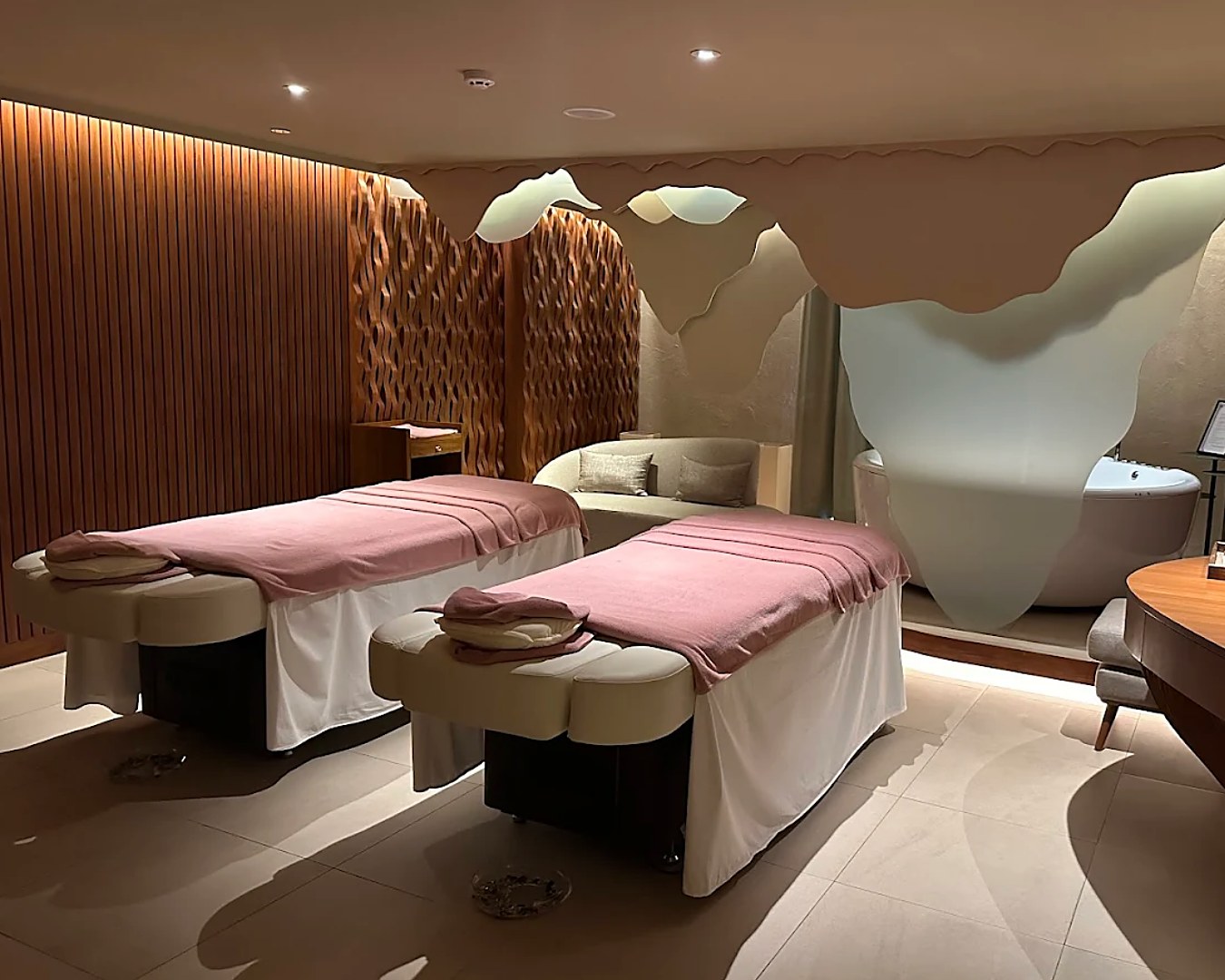
Her Rhythm Retreat runs over three days at The Salil Hotel Riverside in Bangkok. Dr. Punika Panichaya, an obstetrician and gynaecologist who co-founded Hormone House, leads the program. Day one maps your biology through a panel of seven hormone markers. Day two moves through breathwork, a hormone-supportive cooking class with the other women in the program, hyperbaric oxygen therapy, infrared sauna, and an evening session on your cycle. Day three turns everything into a 90-day plan you take home. This is what a medical wellness retreat in Bangkok looks like when it is built around your own biology rather than a fixed itinerary.
The schedule leaves gaps. Some women use them to go out with the others they met during the program. Others stay in and have the kind of quiet they have not had in months. Either way, you are still in Bangkok, and that is part of the trip too. It is a women's self-care retreat and a stress relief retreat in Thailand, and it does not ask you to choose between the two.
Three days does not hand you a new version of yourself. It hands you a clearer picture of the one you already have, and a practical plan for what to do next. For a growing number of women in their 30s and 40s, that turns out to be exactly what they were looking for.
FAQ
Do I need to be in perimenopause to benefit?
No. Most women who come are in their 30s and early 40s, before any clinical changes show up. The point is to understand your hormonal baseline now, while there is still time to act on it.
Is this a medical treatment?
No. It is an assessment and a plan. The hormone panel and expert sessions give you information about your own body. What you do with that information, including any medical follow-up, happens afterward with your own doctor.
What if I would rather not do the group activities?
That is fine. The cooking class and group sessions are part of the program, but the gaps in the schedule are yours to use however you want, alone or with the other women.
- Cleveland Clinic, The HPA axis (the body's stress-response system)
- Everyday Health, Cortisol: the body's stress hormone
- Cleveland Clinic, Progesterone
- PsychCentral, The "tend-and-befriend" stress response
- Harvard Health, The health benefits of strong relationships
- Taylor et al., Biobehavioral responses to stress in females (PubMed)
- Vegavero, Female hormones and their functions

