
What Makes a Wellness Retreat in Thailand Different from a Luxury Hotel?
If you have come back from a five-star resort feeling roughly the same as when you left, you already know something is off. The bed was perfect. The food was clean. You had a massage every afternoon and watched the sun drop into the ocean from a terrace that cost more per night than most people's rent. And somehow, somewhere around the flight home, the weight came back.
You are not broken. The holiday just gave you the wrong thing.
What you got was rest. What you actually needed was recovery. We tend to use these words as though they mean the same thing, but they do not, and that gap is exactly why so many people come home from expensive holidays still exhausted.

A tranquil beachfront setting, the perfect environment for pure relaxation.
Rest and Recovery Are Not the Same Thing
Rest is the absence of activity. You stop. You lie down. You spend three hours by a pool pretending to read while your mind rehearses next week's meetings. Your nervous system appreciates the slower pace, but nothing underneath has actually changed. Think of it as turning the volume down without closing any of the open tabs.
Recovery is different. It is the process of repairing the specific things that months of pressure have worn down, and it requires the right inputs at the right time, shaped around what your body is actually doing wrong right now. A luxury hotel is genuinely excellent at providing rest. It was never designed to do the other thing. That is not a flaw. It is just a different product built for a different need.
The problem is that when you genuinely need recovery, rest feels like it should be enough. It is not. And coming home still depleted after a trip you saved for and planned carefully is its own kind of discouraging.
What Most Wellness Experiences Actually Offer
The word wellness has been stretched to include almost everything. A hotel gym counts. So does a sound bath, a cucumber water station, and a spa menu with seventeen options that all sound equally restorative. None of this is bad. But if you have ever chosen a treatment because it sounded good rather than because you knew it was what your body needed, you already understand the limitation.
Most spa programs, even very good ones, work from a catalog. Every guest gets the same menu regardless of what their body is doing that week. You bring your specific biology, your specific exhaustion, your specific pattern of not quite sleeping well and not quite feeling sharp, and you receive a beautifully packaged experience designed for a general version of you.
A genuinely diagnostic wellness program starts differently. Some programs measure your HRV and biomarkers on the first day so that everything that follows is built around your body, not a ready-made template. That distinction sounds small until you understand what those numbers actually show.

Assessment is the first step in creating a plan that addresses your specific needs.
Why You Can Sleep Eight Hours and Still Feel Like You Haven't
Here is what happens when you run hard for too long.
Your cortisol, the hormone that controls your wake-up signal, stops following its natural rhythm. It should peak in the morning and ease off through the afternoon. When months of pressure flatten that curve, you wake up already behind, reaching for coffee before your feet hit the floor. Late-night screens, skipped meals, and hard workouts after dark all push cortisol higher at the wrong hour, which means the next morning starts even further back than the one before.
At the same time, something called HRV, heart rate variability, begins to drop. HRV is simply a measure of how well your nervous system can shift between effort and rest. When it is high, you can push hard through the morning and genuinely switch off by evening. When it falls, you get stuck somewhere in between. You can spend a week in paradise and still wake up tired. Your nervous system never received the signal it was safe to let go.
High-functioning people miss this because they compensate well. The signals show up sideways, as a shorter fuse with people you love, a flatness where curiosity used to be, or decisions that take twice as long as they should. A low-grade fog you have started to mistake for personality.
A good holiday interrupts the load. It does not fix the loop.
What a Personalized Wellness Program in Thailand Can Actually Change
This is where program design starts to matter in ways you can actually feel when you come home.
Restore Retreat starts with real data rather than assumptions. A functional assessment on day one shapes everything that follows, from what you eat to how your sleep is supported to how your days are structured. It is a focused program, not a long-stay retreat, designed for people whose systems have been under real pressure. The goal is to give your body the specific conditions it needs to reset and to measure whether it did.
Her Rhythm Retreat applies the same diagnostic approach for women specifically. Your hormonal cycle directly affects your energy, your sleep quality, and how well you recover from stress. Her Rhythm Retreat times every intervention around how your body actually works across the month, so things land when you are most receptive to them.
Both programs start from diagnosis rather than a menu. If the issue shows up in one specific area, disrupted sleep or a mind that will not slow down, Sleep Reset and Focus Reset go narrower. Sleep Reset targets the depth and stages of your sleep itself, the parts that determine whether you actually restore overnight. Focus Reset addresses cognitive fatigue, the scattered attention, slow decisions, and the mind that will not quiet even when your body is still. Both are grounded in the same logic. Your body responds to specific, well-timed inputs far better than to general rest.
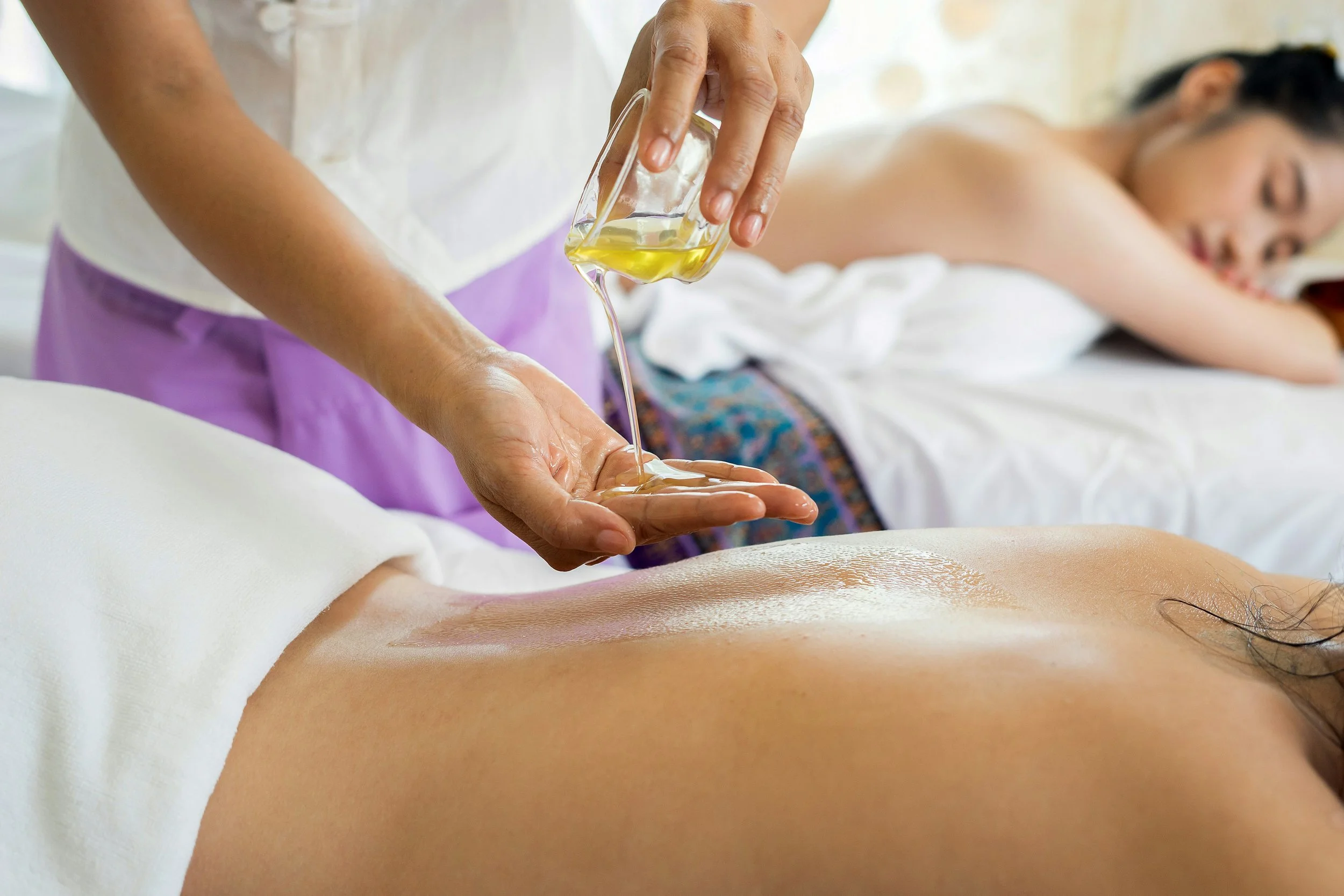
A deeply restorative oil massage therapy, focusing on targeted physical recovery and resetting the nervous system.
So Which One Do You Actually Need?
A luxury hotel is the right choice when you need a genuine break. A change of scene, good food, warmth, and time that belongs entirely to you. That is a real need, and it is worth meeting well.
A wellness retreat becomes the right choice when you have already had that break and the exhaustion came back anyway. When the problem is not your situation, but what your body has stopped being able to do on its own.
Thailand, specifically, offers something difficult to find elsewhere. The practitioners here carry real depth, the cost of care makes this kind of program genuinely accessible compared to London or Singapore, and the environment works with your recovery rather than competing with it. That combination is rarer than it sounds.
The clearest sign you need a retreat is repetition. You feel better for a week, then revert to exactly how you felt before. The problem is not your choice of destination. It is that you have been resting when what you needed was to actually recover, and a good program starts by asking what your body actually needs first.
